Levoplant invests in the future with a new greenhouse built within an existing structure
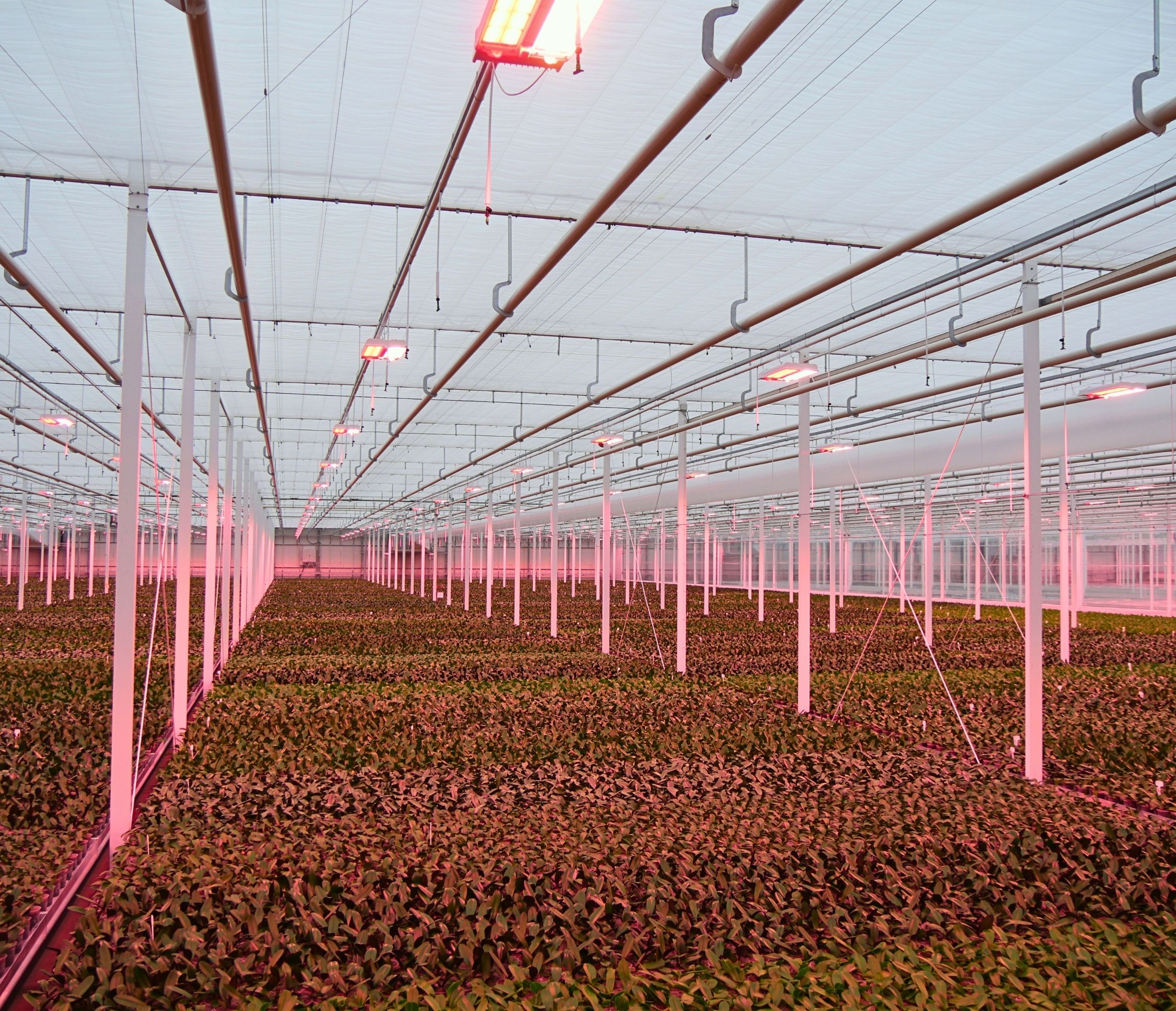
Levoplant, one of the largest Phalaenopsis growers in the Netherlands, is expanding with a fully transformed six-hectare greenhouse. What was once a tomato greenhouse without grow lighting has now been converted into a high-tech orchid production facility.
For this expansion, Levoplant worked closely with Orance – Grow Light Architects, a business partner for forward-thinking horticultural companies. Orance supported the project from the design of the energy infrastructure through to the implementation of a fully controllable LED lighting system.
The expansion increases Levoplant’s total greenhouse area to approximately 20 hectares and reinforces the company’s ambition to remain a leader in innovation and efficiency.

For Levoplant, the step made sense and aligned well with its long-term strategy. At the same time, the project presented significant complexity. The existing greenhouse had originally been built for tomato production and lacked the technical infrastructure required for orchid cultivation under grow lights.
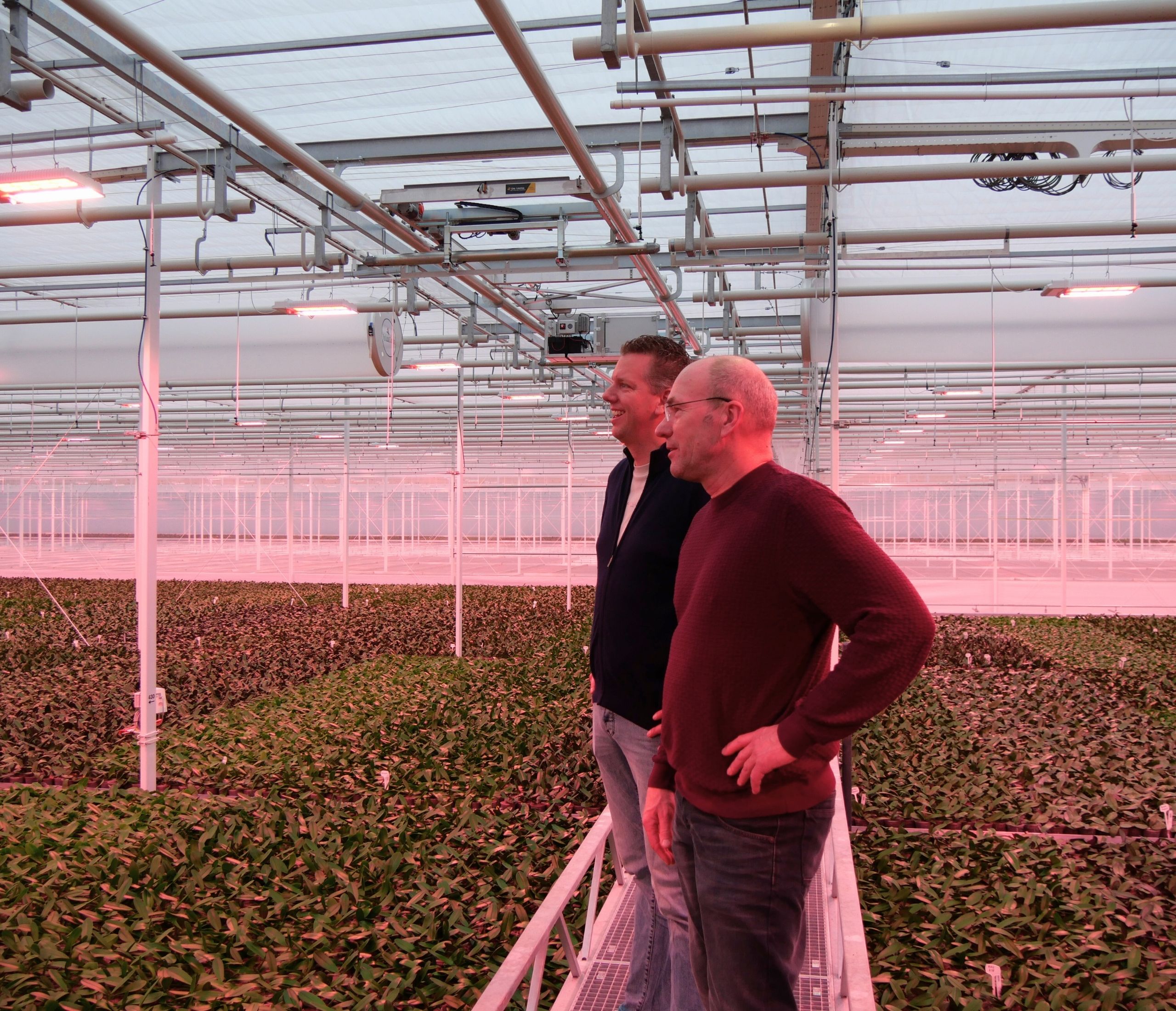
“Basically, we bought a very light greenhouse with a concrete floor and nothing more,” says Ron Duijvestijn, Operations Manager at Levoplant. “Everything had to be rebuilt and installed from scratch. In practice, it’s a new-build project.”
The greenhouse was completely redeveloped. Table systems, modified heating, new irrigation systems, additional screen installations, air handling units and a completely renewed power supply with new transformer stations and a heavier grid connection were installed. Only the existing structural frame and roof remained intact.
What makes this project unique is that it is not a renovation, but a complete rebuild within an existing structure. Even the sidewalls were replaced. At the same time, a technological step forward was made with spectrum-controllable LED fixtures that can be adjusted per greenhouse compartment. This level of flexibility is still uncommon in orchid cultivation.
Energy as the foundation
The challenge was not only in the cultivation technology, but especially in the energy infrastructure. The greenhouse did not have the required main power installation and there were insufficient transformer stations available. In addition, the entire floor was made of concrete, which meant that openings had to be drilled through the floor to install underground power cables.
According to René, founder of Orance, a consultancy specialized in LED lighting for professional horticulture, a project like this does not start with the grow light fixtures, but with the energy infrastructure. “Before you even talk about fixtures, the foundation needs to be right. Main power installation, transformer stations, cable structure, grid connection and provisions for the future. Only by looking at the complete picture can you arrive at the optimal solution.”
Together with implementation partners Annexo and Stolze, the complete medium- and low-voltage installation was designed and realized. Future developments were deliberately taken into account. “For example, some cables were installed with extra capacity and provisions were made for future installations,” René explains. “You know that additional systems or connections to other locations may be needed later. By building that flexibility into the design now, you avoid costly modifications later.”
Independent choices in a rapidly evolving market
Once the energy infrastructure was in place, the next step was selecting the LED installation. Levoplant already operates LED lighting at multiple locations and has experience with several suppliers. For this greenhouse and its specific cultivation requirements, Orance conducted a full market comparison. “LED was never a question,” says Ron. “If you want to use grow lighting, it’s LED. The real question is which fixture best fits our crop, our greenhouse and our ambitions.”
Orance translated the crop requirements and greenhouse layout into specific lighting scenarios and evaluated suppliers based on light distribution, efficiency, control options and investment costs. “In this greenhouse the fixtures are relatively far apart, while we still wanted to maintain high light uniformity,” René explains. “That’s why the final choice was made for the fixtures from Signify.”
The system allows growers to adjust both spectrum and intensity per compartment. “That gives us more control,” Ron says. “And our team is perfectly capable of working with it.”
The market for horticultural lighting develops rapidly and product lines change frequently. “It’s not the case that one specific supplier always comes out on top,” René emphasizes. Levoplant therefore uses different lighting solutions across its greenhouses, depending on what is technically and economically the best fit for each location at that time.
Maintaining control in a complex project
The scale of the project required strict coordination. A six-hectare high-tech greenhouse represents a major capital investment and there is a long period before the first revenues become visible. Budget control and risk management were therefore key priorities.
“You invest a lot of time and money long before you see the first return,” Ron explains. “And there’s no way back. It has to succeed.”
Due to the complexity, the electrical installation was not tendered through a traditional procurement process. “Normally you first prepare the specifications and put them out to the market so suppliers can submit their proposals,” says René. “In this case we were already drilling cable routes while not everything was finalized yet. That’s why we deliberately chose to work closely with one fixed installer, Stolze. Short lines of communication and intensive coordination were essential to avoid delays.”
Investing in expertise as risk management
Levoplant does not see the involvement of external specialists as an expense, but as part of risk management. “In relation to a project of this scale, those costs are relatively small,” Ron explains. “But the knowledge you gain always pays for itself. Either in higher returns or by preventing costly mistakes.”
External expertise was also used for the subsidy process. Subsidies formed an important part of the financial framework and budget calculations. Orance provided the necessary documentation, which resulted in subsidy approval for the lighting installation.
“Through short lines of communication and regular coordination we ensured that all parties delivered the required documentation on time,” says Ron. “That allowed the subsidy application to be completed successfully.”
A continuous development process
Although the new greenhouse is already operational in the first sections, the collaboration continues. “We are currently looking at the shipping buffer area,” René explains.
The six-hectare investment is therefore not an end point, but the next step in Levoplant’s ongoing development. The company continues to invest in technology, efficiency, and product quality to strengthen its market position. As Ron summarizes:
“We’ve built a Rolls-Royce here with all the options. That can be challenging, but with the right partners around the table you ensure the project remains manageable. And that gives confidence.”